
Workflow automation that removes handoff work
Map, connect, and improve recurring business processes without turning every exception into a hidden operational failure.
Examine this serviceProcessly Labs maps the handoffs, connects the systems, and builds the controlled AI workflows that make repeated work easier to own.
Every engagement starts with the process, data, permissions, failure modes, and accountable owner. Tools come after those decisions.
Map, connect, and improve recurring business processes without turning every exception into a hidden operational failure.
Examine this serviceBuild knowledge assistants and task agents that cite their sources, respect permissions, and know when to hand work back to a person.
Examine this serviceConnect the tools your team already uses with explicit data contracts, permissions, monitoring, and recovery paths.
Examine this serviceExtract, validate, classify, and route information from business documents without treating uncertain output as fact.
Examine this serviceFind the work worth changing, quantify the opportunity carefully, and leave with a practical roadmap even if no build follows.
Examine this serviceCommission a defined support milestone for monitoring, repairs, controlled changes, or documentation under a separate written scope and invoice.
Examine this serviceValidate, deduplicate, enrich with permitted sources, and route the next action without hiding the qualification logic.
Inspect the sales patternRetrieve approved passages, cite the source, prepare a response, and send disputes or uncertainty to a person.
Inspect the support patternConnect records once, preserve source context, and give mismatches a visible queue instead of another spreadsheet.
Inspect the operations patternGovern the source collection, preserve permissions, and return answers people can verify against the document.
Inspect the knowledge patternThe process moves from observation to controlled launch and documented ownership. Each stage has an output and a decision.
We examine the process as it runs now, including exceptions, ownership, data quality, and the cost of failure.
The current and proposed workflows are drawn before software is chosen. Human decisions stay visible.
We define the architecture, access model, test cases, fallback behavior, and measures of a useful outcome.
The system is built in small, inspectable pieces with versioned configuration and clear boundaries.
Expected cases, awkward inputs, provider failures, permissions, and human escalation paths are tested.
A controlled release starts with monitoring and a rollback path, not a switch flipped in the dark.
You receive system notes, ownership guidance, runbooks, and the assumptions that shaped the build.
Your team learns how to operate, review, and change the automation. Later support can be scoped and invoiced as separate work.
Six original launch guides cover opportunity selection, workflow design, platform choice, RAG, security, and value modeling.
 Opportunity scoringField note 01
The best automation target is rarely the loudest complaint. It is the process where repeated effort, stable rules, usable data, and accountable ownership meet.
Read the field note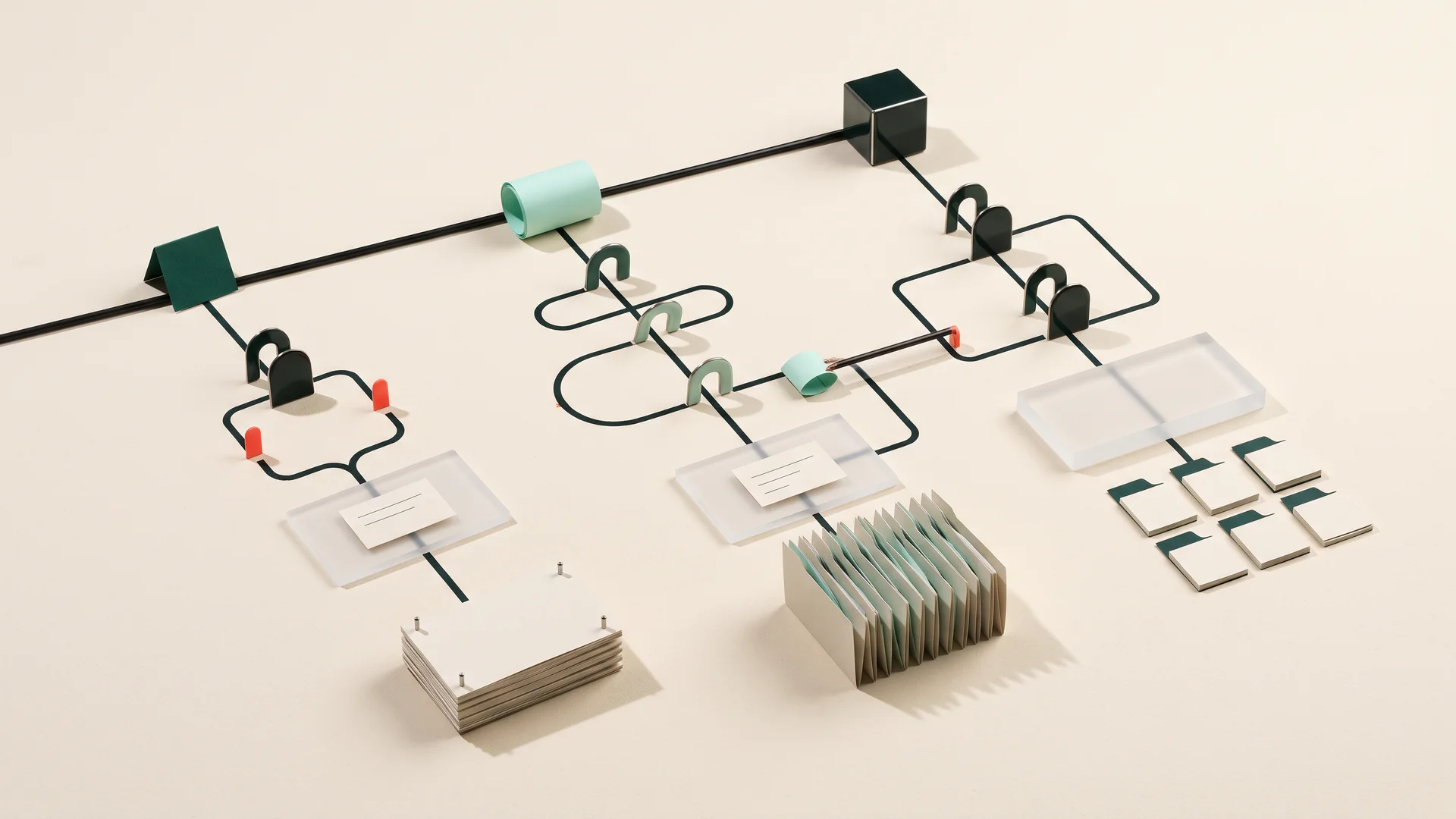 Example workflowsField note 02
A workflow example is useful only when it shows the controls and awkward cases, not just a neat row of app logos.
Read the field note Platform comparisonField note 03
Choose the platform your team can operate when credentials expire and a workflow fails at 8:40 on a Monday morning.
Read the field noteA strong candidate is repeated often, follows rules most of the time, uses data you can access, and has a clear owner. High-risk decisions, unstable processes, and work that depends on tacit judgment usually need redesign or human review before automation.
Usually not. The first option is to connect the systems your team already trusts. A replacement is considered only when access limits, poor data, or the cost of maintaining workarounds makes integration the weaker choice.
No. We can model the opportunity, define the assumptions, and measure what changes after launch. Actual results depend on adoption, process volume, data quality, third-party tools, and how consistently the new workflow is used.
We start with data minimization, least-privilege access, provider review, retention limits, logging, and clear human checkpoints. The final controls depend on your systems, jurisdiction, and risk profile, and are documented before the build begins.
Every project receives a written proposal based on scope, technical uncertainty, integrations, testing, documentation, and delivery needs. The currency, taxes, milestones, third-party costs, and refund terms appear before you accept or pay.
Share the workflow, the tools involved, and where the work gets stuck. The audit request is free; detailed discovery or implementation is quoted separately.
Request an automation audit